The short answer: Yes, if the machine is designed for it from the start. A modular machine uses a common base, swappable tooling, and a saved program for each part. That lets one machine run a family of similar parts. One medical device machine we built changes from one product to another in 36 minutes.
That matters because demand shifts. A dedicated line for every part number can sit idle when one product slows down. A modular machine lets you move capacity to where demand is.
How a modular automation machine works
A modular machine splits what stays the same from what changes.
What stays on the machine:
- The frame, guarding, and base
- The controls and safety system
- Robots and servo motion that can be reprogrammed
- Vision cameras that check every part
What changes per part number:
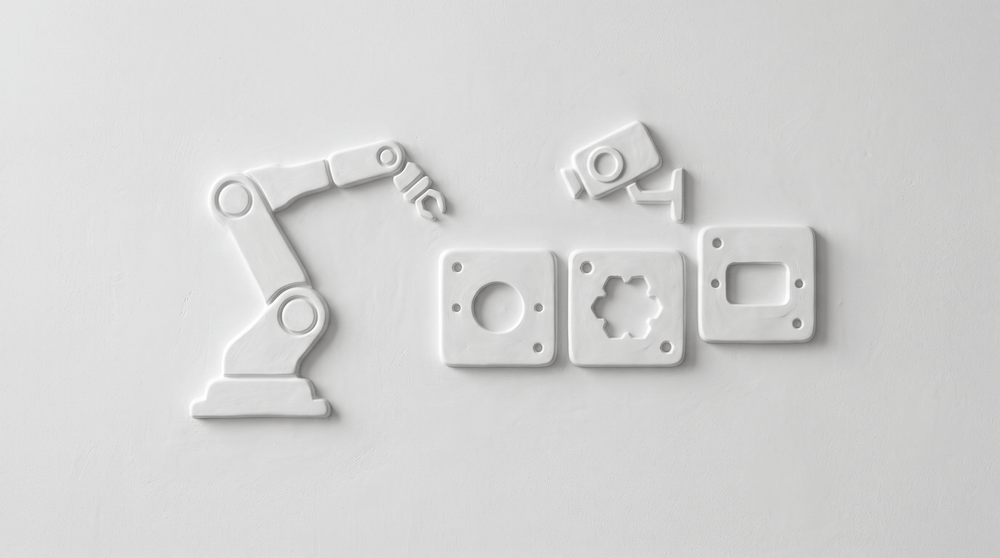
- Nests and fixtures that hold the part, swapped by hand with locating pins
- Grippers or end-of-arm tools
- The saved program (sometimes called a recipe) for that part
The operator swaps the tooling, loads the program, and runs a first-article check. On a well-designed machine, that is minutes, not days.
What 36 minutes looks like in practice
One of our recent machines runs several related medical device parts. Moving from one product to another takes 36 minutes, start to finish. Mark Kiviahde, who leads Pezo, called it a game changer for the customer.
Before, that customer would have needed a separate machine or a long manual setup for each product. Now one machine follows their demand week to week.
Sometimes more robots means more flexibility
On another project, our team used five robots to run three part numbers. On paper, that looked like too much hardware. But each part had different welding and handling steps. Splitting the work across simpler robot stations meant each part number could run without a complex custom mechanism. Andy Larson, founder of Custom Automation Inc. (now part of Pezo), reviewed the design and agreed it was the right call.
The lesson: flexible automation is not always the smallest machine. It is the one that handles your part family with the least changeover and the least risk.
This is not new
Andy built flexible machines long before the word "modular" was popular. Early in his career, he retrofit an old sink-finishing machine into a three-axis servo system. It ground the same scratch pattern into sinks from 6 to 27 inches wide. The customer went on to buy six or seven more. Programmable servo motion, instead of fixed cams, is what made one machine handle every size.
When a modular machine makes sense
- Your parts are a family: similar size, similar steps, different details
- No single part has enough volume to justify its own machine
- Your product mix changes month to month or year to year
- You expect new part numbers in the same family later
When a dedicated machine is better
- One part runs at very high volume and needs the fastest cycle time
- The parts are too different in size or process to share tooling
- You never expect the product to change
Modular machines can cost more up front. But they often make the payback math work. Labor savings across three part numbers on one machine can clear a two-year payback that no single part could clear alone.
What to watch for
- Incoming part consistency. Every part number needs consistent parts. A machine is less forgiving than a person.
- Changeover design. Locating pins, quick-release clamps, and labeled tooling keep changeover fast and repeatable.
- Validation. In medical devices, each part number on the machine needs its own validation. Plan for that time.
- Design early. Parts designed with automation in mind are easier to fit into one family. (See: When Should Automation Engineers Get Involved in Medical Device R&D?)
Frequently asked questions
Can one automated machine run more than one part number? Yes. A modular machine uses a common base and controls, with swappable nests, grippers, and a saved program for each part. One medical device machine we built changes over in 36 minutes.
What is a good changeover time for an automated assembly machine? It depends on the parts and process. For a family of similar small parts, a well-designed modular machine can change over in under an hour.
Is a modular automation machine more expensive? It can cost more up front than a single-part machine. But spreading labor savings across several part numbers often makes the payback stronger.
How long does a modular automation machine take to build? Plan on about a year from order to steady production, the same as most custom automation. (See: How Long Does It Take to Implement Custom Automation?)
Have a part family that could share one machine?
Book a free automation audit. One of our engineers will look at your part numbers, your volumes, and your changeovers, and tell you whether a modular machine makes sense.
Book a Free Automation Audit