Most catheter handle development follows a familiar path. You design the device, validate the concept, then go looking for a molding partner when you are ready to scale. By then, the handle geometry is locked, the tooling decisions are made, and any process problems you discover are expensive to fix.
There is a better way to sequence this, and it starts with overmolding earlier in the process.
What overmolding actually does for a catheter handle
A catheter handle has to do several things at once. It has to give the physician a secure, ergonomic grip. It has to anchor the catheter shaft and any internal components. And it has to do all of this while meeting the dimensional and material requirements of a medical device.
Overmolding solves this by forming the handle directly around the shaft and internal components. Instead of molding a handle separately and then assembling it, you encapsulate the components in a single forming step. The result is a stronger bond, fewer assembly operations, and a part that behaves consistently from prototype to production.
For single-piece catheter flow, where each device is built one at a time, this matters even more. The handle is often the most geometrically complex part of the device, and getting it right early prevents a cascade of downstream problems.
The case for prototyping the molded handle early
Here is the part most teams miss. When you prototype the overmolded handle during R&D rather than after, you validate the process at the same time you validate the design.
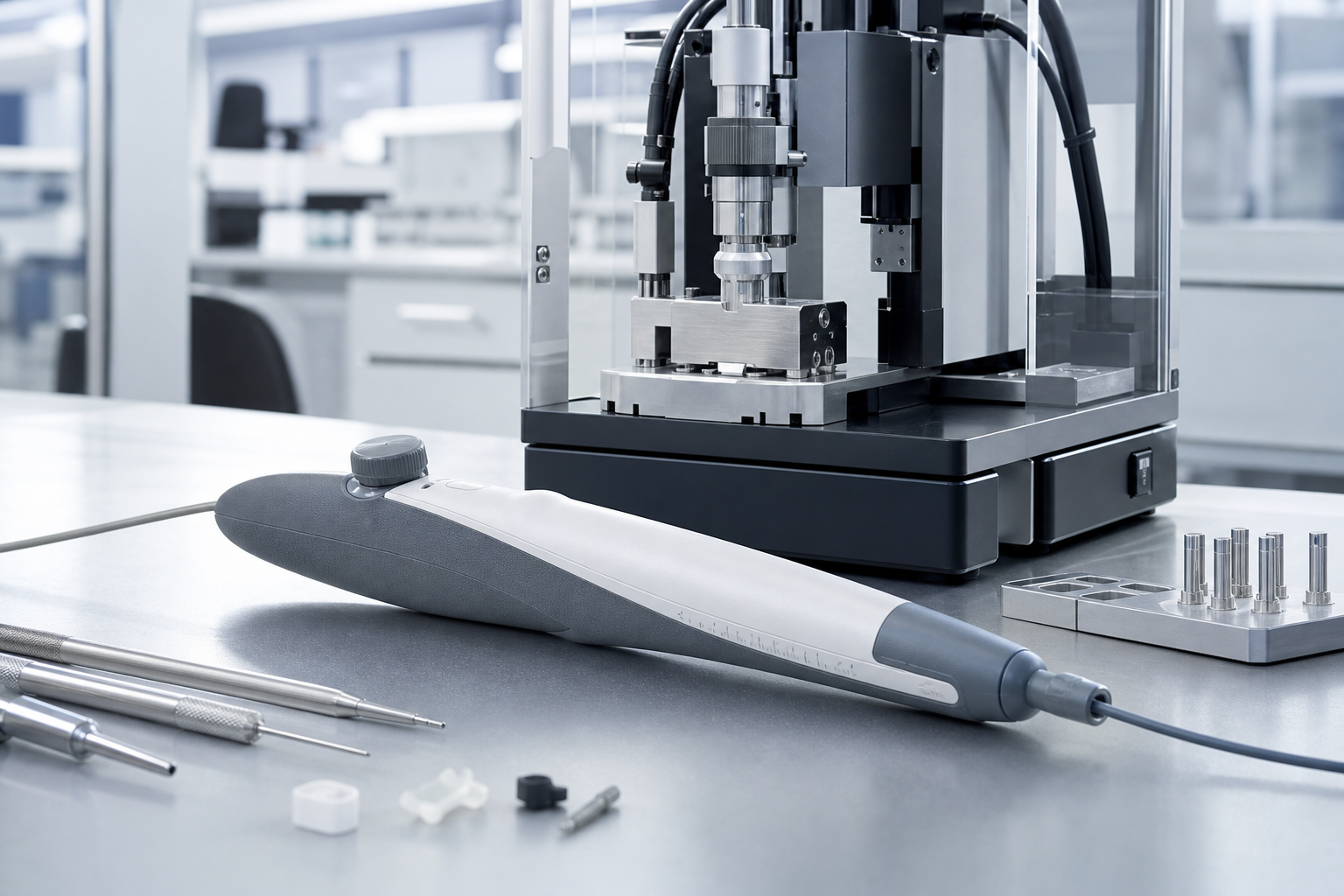
Bench-top molding makes this practical. A compact molding setup that fits on a cleanroom workstation lets you produce real overmolded handles in low volumes, using production-representative materials and process conditions. You are not waiting on a full production line to tell you whether your handle design molds cleanly.
When the process gets validated during R&D, teams tend not to want to change it later. The process that produced a good prototype becomes the process that runs in production. That continuity is valuable in a regulated environment, where every process change carries documentation and validation overhead.
Why fit and tolerance drive everything downstream
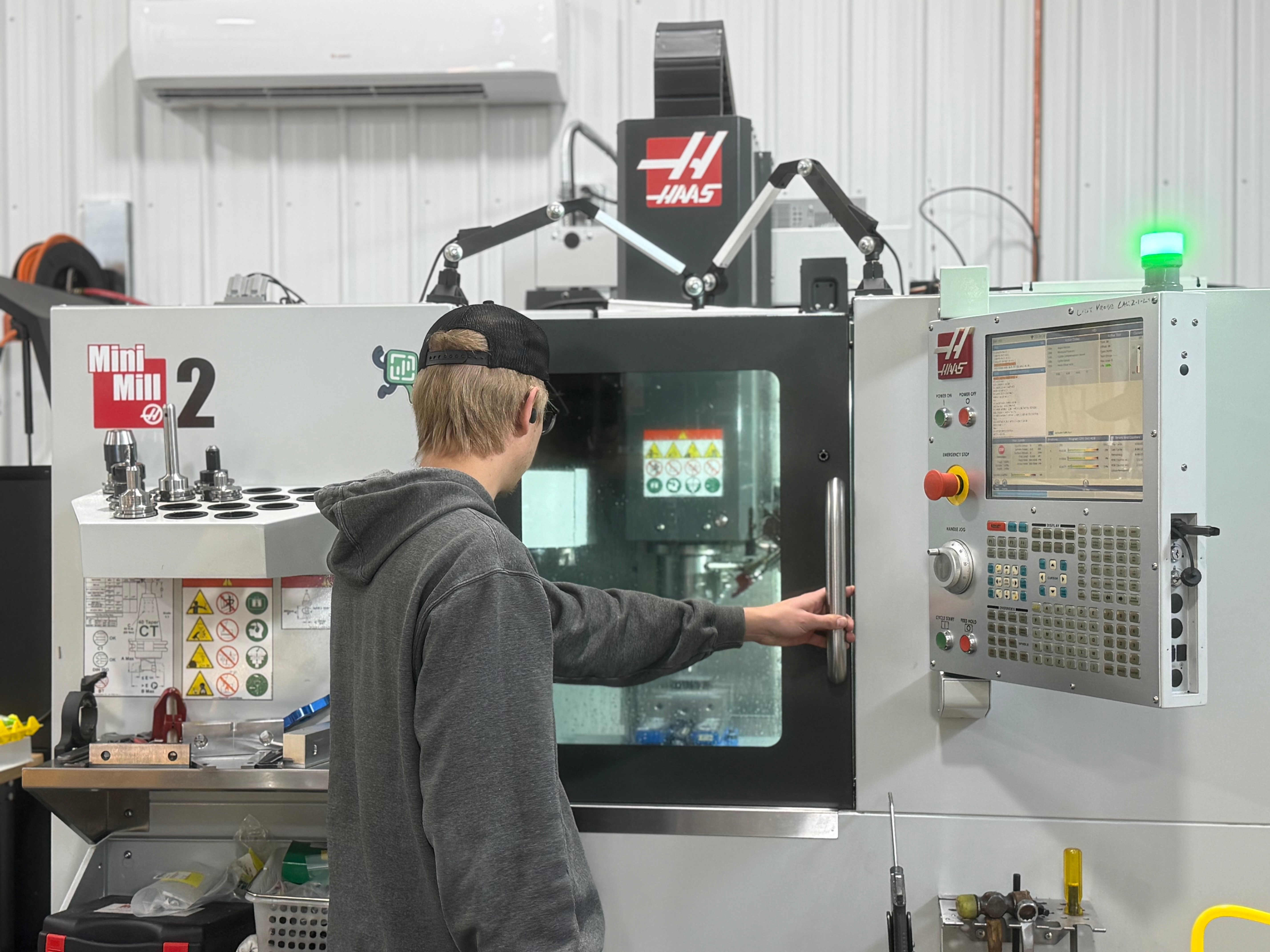
Overmolding a catheter handle is unforgiving of variation. If the shaft is not held precisely during the molding step, you get inconsistent wall thickness, poor bonding, and parts that fail inspection. The components that position and hold the tube during molding have to be machined to tight tolerances, because the molded result can only be as good as the fixturing that produced it.
This is where precision machining and molding intersect. The tooling and fixturing that hold your components are as important as the molding process itself. A handle program that treats these as separate problems usually finds out the hard way that they are the same problem.
Bringing it together
The teams that move fastest from concept to production are the ones that validate design and process together. Overmolding the handle early, on a setup that mirrors production conditions, removes risk before it becomes expensive. It shortens the path to a handle that works, molds consistently, and holds up under real production volumes.
If you are developing a catheter device and the handle is still a question mark, it is worth molding one early. You will learn more from a real overmolded part than from another round of design review.