It’s Not the Machine. It’s the Person Running It.
A lot of shops lead with their equipment list.
We don’t.
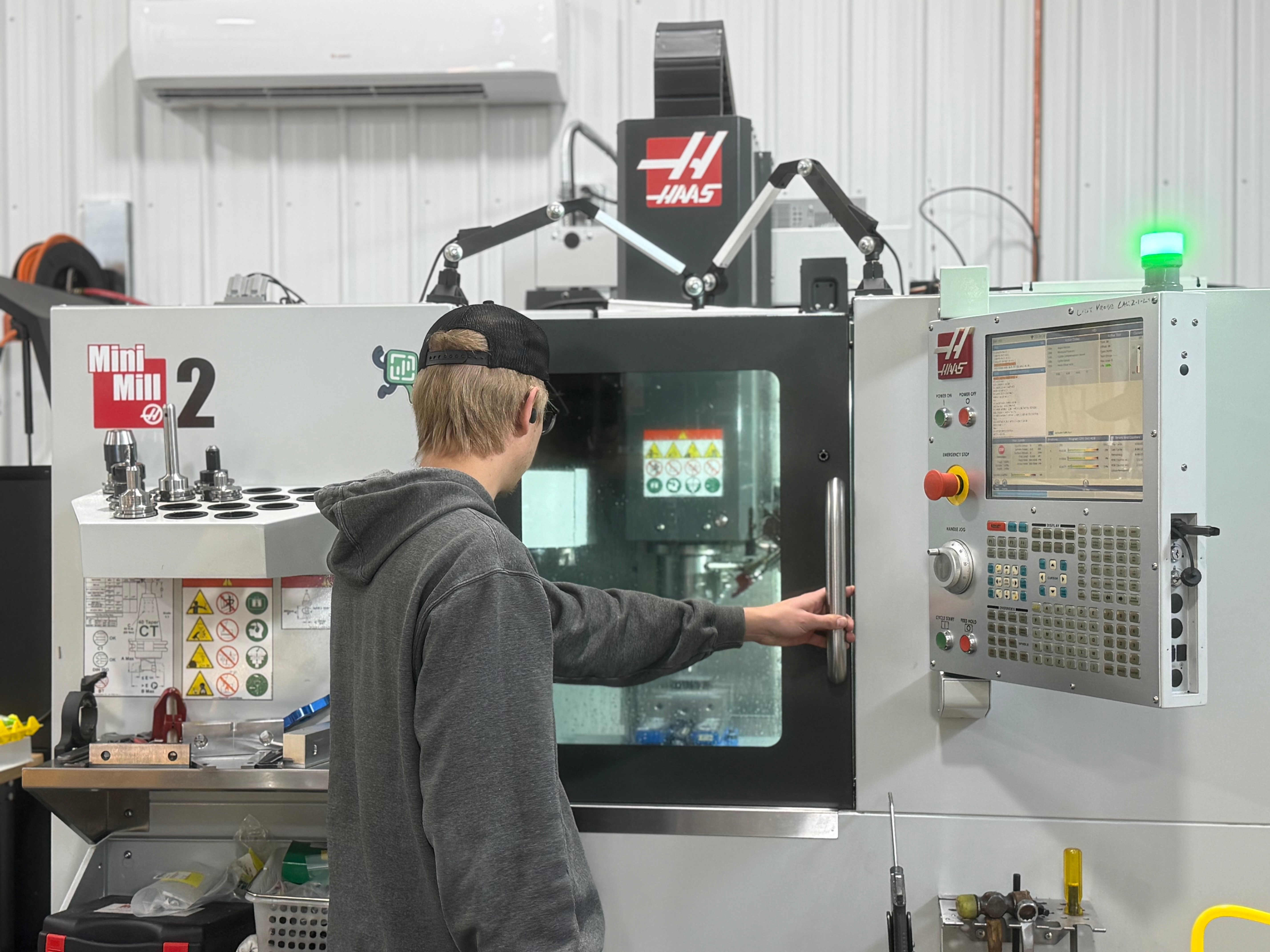
Most serious machine shops today have good machines. CNC is everywhere. Swiss machines aren’t rare anymore. You can buy one if you have the money.
What you can’t buy is 15–20 years of experience running tight medical parts.
That’s the difference.
Tight Tolerances Aren’t Just a Number
In medical device machining, we regularly see tolerances under ±0.0005”.
That’s when things get real.
At that level, it’s not just “hit the print.”
You’re managing heat.
You’re managing tool wear.
You’re managing how the material moves after you cut it.
You’re thinking about how that part fits into an assembly you’ll never see.
A lot of shops can hold that tolerance once.
Holding it across a run is different.
Holding it across multiple runs is even harder.
And when those parts go into a catheter system, an implant, or a laser cutting machine, being “close” doesn’t cut it.
Difficult Materials Separate the Field
Medical work doesn’t use easy materials.
We see:
- 17-4 stainless
- 316 stainless
- Titanium
- High nickel alloys like Inconel
These materials are great for strength and corrosion resistance.
They’re hard on tools. They generate heat fast. They don’t forgive poor setups.
Swiss machining is powerful for small, precise medical parts. But Swiss is also complex. It combines turning and milling in one automated process.
If the setup isn’t right, you just make scrap faster.
That’s why expertise matters more than the machine.
Real Example: Laser Stent Cutting Bushings
We had a medical customer building a laser stent cutting system.
They needed small bushings. Tight tolerance. Difficult material.
Their previous supplier struggled. Lead times slipped. Parts showed up out of spec. Their team was inspecting and sorting instead of building.
They were frustrated. Production timing was getting tight.
We looked at the print. Talked through how the part actually functioned in the system. Adjusted the machining approach. Changed tooling strategy. Tightened up the process control.
We turned 10 validation parts in one week.
After that, we moved into production support. Over time, part consistency improved and their yield improved by about 30%.
That’s what matters. Not just “we hit the print.”
Their system worked better.
We Challenge the Print — Respectfully
Here’s something that doesn’t get talked about much.
Sometimes the print was made when volumes were low. Early prototype stage. Five parts at a time.
Then the program scales. Now you need 50,000.
But the tolerances were never revisited.
We’ve had plenty of conversations where we ask,
“Do you really need this tolerance here?”
Not to cut corners. To protect function.
Sometimes we tighten things up.
Sometimes we show where it can open up.
Either way, the goal is the same: stable production and better yield.
That’s the engineering side of machining.
Why Customers Actually Call Us
Most of our CNC and Swiss machining work starts the same way.
Another shop no-quoted it.
Or they tried and missed.
Or parts showed up and didn’t perform.
Or a line is down and they need help now.
We run with what we call an ER mentality.
If something is critical, we move. We don’t overcomplicate it. We solve the immediate problem first. Then we improve the process.
Because in medical manufacturing, delays cost more than just money.
Emergency Machining
When the Line Is Down, We Move.
In medical manufacturing, emergencies happen.
A supplier misses.
Parts show up out of spec.
Validation fails.
A machine can’t get approved without a few critical components.
Now the clock is running.
When that call comes in, we don’t build a three-week quoting process. We get the drawing. We review the risk. We talk through function. Then we move.
We’ve turned tight-tolerance Swiss parts in a week to save validation schedules.
We’ve milled critical components in two days to keep half-million-dollar equipment from sitting idle.
That’s not hero work.
That’s responsibility.
If your medical production line is in trouble — or heading that way — call us.
Not a long intake form.
Not a chain of emails.
Just call.
We’ll tell you straight if we can help.
Need parts right — and right now? Let’s talk.